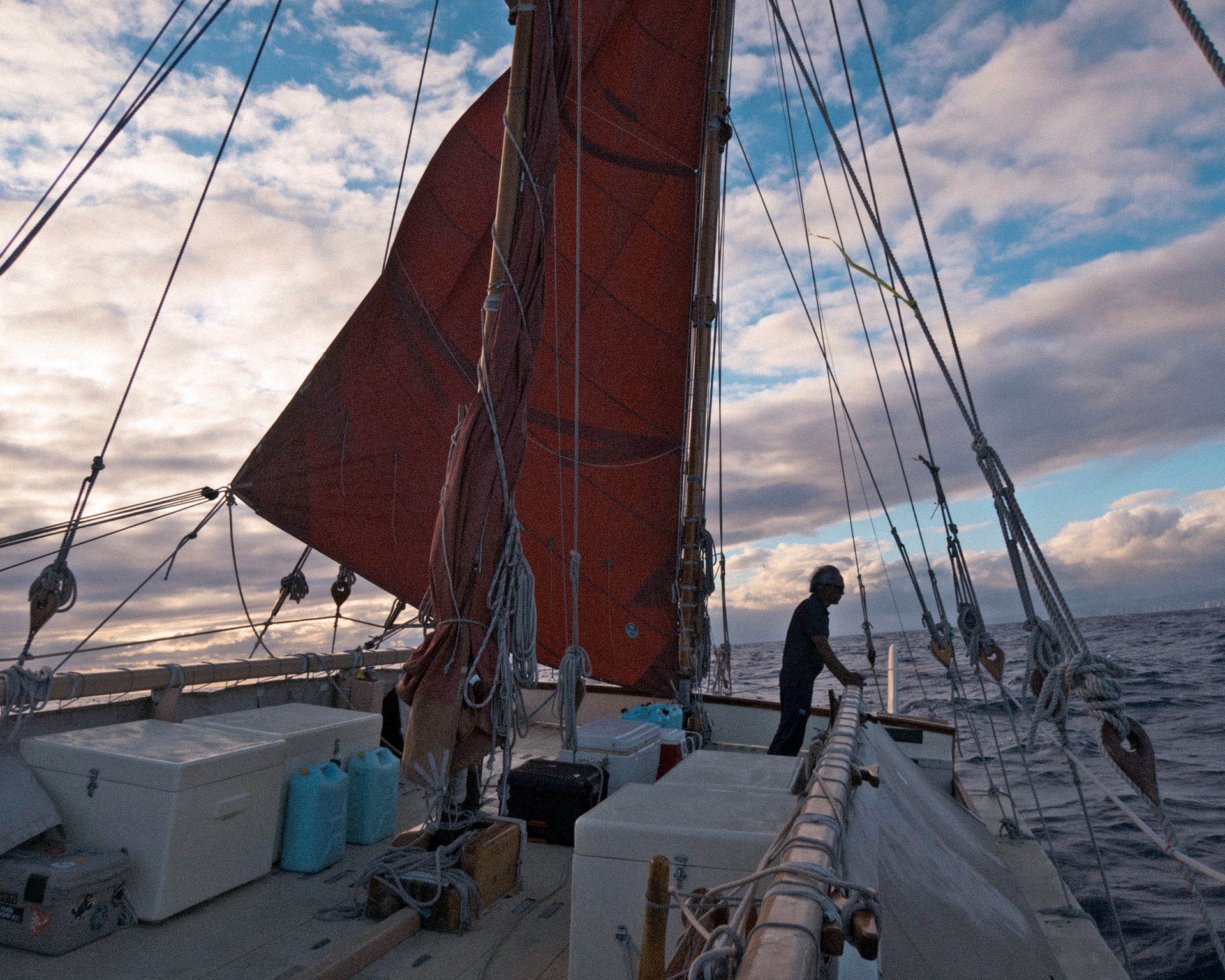


As we go to print, the Hōkūleʻa is currently docked in Ōkahu Bay, Auckland, Aotearoa.
The fabled Hawaiʻian voyaging canoe — a replica of the traditional canoes that allowed the Polynesians to fan out across the Pacific a couple of thousand years ago — is undertaking a 68,000km Moananuiākea voyage (circumnavigation) of the Pacific, which started in Alaska three years ago and is due to be completed in 2028, although the Pacific will have the final say on when that actually is.
The Hōkūleʻa has been in Aotearoa since late last year and was due to have already left for Tonga, but has been held up by an ancient force, far older than the Polynesians and their original canoes.
A strong El Niño has been forecast, weakening the trade winds and leaving the Hōkūleʻa without enough wind to make it north. El Niño is a climate cycle as old as the Pacific itself, and the Polynesians were quick to learn the signs of its arrival... and the opportunity it presented every few years.
The first Polynesians had travelled east into the Pacific, headlong into the belt of easterly tradewinds that rip through the tropics. But every few years those winds would slacken or even reverse for months on end. It made heading east easier, and we can imagine it played a part in them getting as far east as Easter Island, Rapa Nui. As navigators and sailors, the Polynesians were masters. They joined the dots in the Pacific using stars and wind and a million little clues that had passed down through generations.