

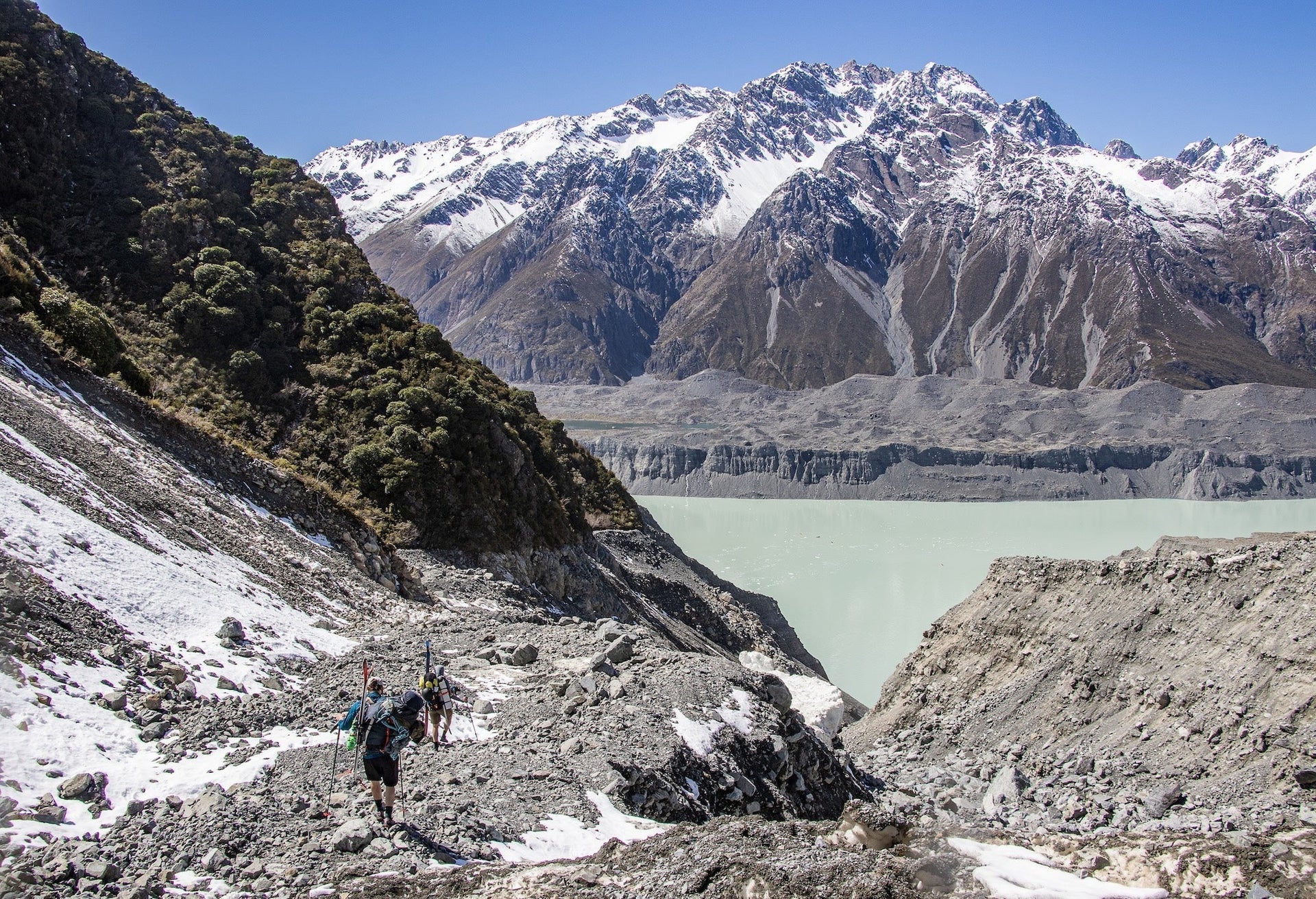
“I don’t think there’s a safe way down.” That’s my brother Kit, voicing what’s been getting louder in our heads. We’d been searching for the infamous ‘Garbage Gully’, a cutting into the Tasman Glacier moraine that made for the easiest access onto the glacier 200 metres below. Instead, we could see landslide debris fanning out onto the glacier and freshly overhanging vegetation barely clinging onto the shelf we were standing on. There’d been a rain-on-snow storm ten days earlier that caused flooding and landslide damage around my hometown of Queenstown, and had also turned Garbage Gully into a pile of silt and rubble on the glacier below.
Quintin and I cautiously approached the edge in a few more spots, trying to spot a less sketchy route down, before reluctantly agreeing Kit was right. Our planned route had us going down Garbage Gully with packs full of ski mountaineering and camping gear, and then looping back from the Malte Brun Range and Murchison Valley to ascend Garbage Gully. Braving the moraine wall twice in four days was too much rockfall danger for our liking, so carrying skis onto the Tasman Glacier would have to wait for another day.
We retreated from the cool breeze to Ball Shelter, and over a cup of tea, brainstormed our back-up options. Someone mentioned that this now three-bunk shelter had once been a bustling ski lodge, with climbers and tourists driving in daily from the Hermitage. We’d seen remnants of the foundations for ‘Ball Lodge’ still clinging to the moraine wall, which I’d heard slept 100 and hosted the National Skiing Championships. All three of us were keen to do a trip on the iconic Ball Pass crossing. The matter was settled. Exploring Ball Pass had to be better than bailing back to Unwin Lodge with our tails between our legs. Dinner quickly followed, before climbing into sleeping bags on the classic slippery green DOC mattresses.

Nick and Quintin navigate the Ball Hut route’s modern mixture of avalanche debris and scree. Photo: Kit Pascoe
One hundred and thirty years earlier, when the Tasman Glacier sat high against the valley walls, the original Ball Hut was constructed here as New Zealand’s first hut built purely for recreation. At the time it stood beside the glacier itself, below ice that has since vanished. For decades through the 1900s, buses arrived daily carrying skiers, climbers, and glacier walkers. Now, it’s walking access only.
For Kit, Quintin, and myself it had been a four-hour walk to Ball Shelter, alternating between old benched road, scree slope, and detours navigating around washouts. The glacier ice has melted and thinned rapidly, forming a new terminus lake from the 1970s onwards that is now up to 245 metres deep.
A pink morning glow greeted us as we continued up Ball Ridge. From our route we could see the Tasman Glacier and Aoraki, and spot where Ball Hut’s rope tow had been located on the Ball Glacier, carrying generations of school groups and families into the mountains to learn to ski.
Dave Fearnley fondly remembers a family trip in 1970, when he was nine. It could be biting cold in the hut, with a big diesel heater knocking the edge off and doubling as the stovetop for cooking. The local kea had a game of grabbing old cans from the dump and banging them against the windows to get attention. There was also night skiing at times, and a social crowd in the lodge. Each morning, guides wrapped up a huge bundle of skis before leading guests on the half-hour walk to the rope tow below the Ball and Caroline Glacier Icefalls. Occasionally, skiers would run for cover from booming avalanches off Aoraki. Standing on the Ball Ridge fifty-five years later, it wasn’t hard to imagine them.

It wasn’t all uphill slogging, we found some fun afternoon turns down from Ball Pass to balance things out. Photo: Kit Pascoe
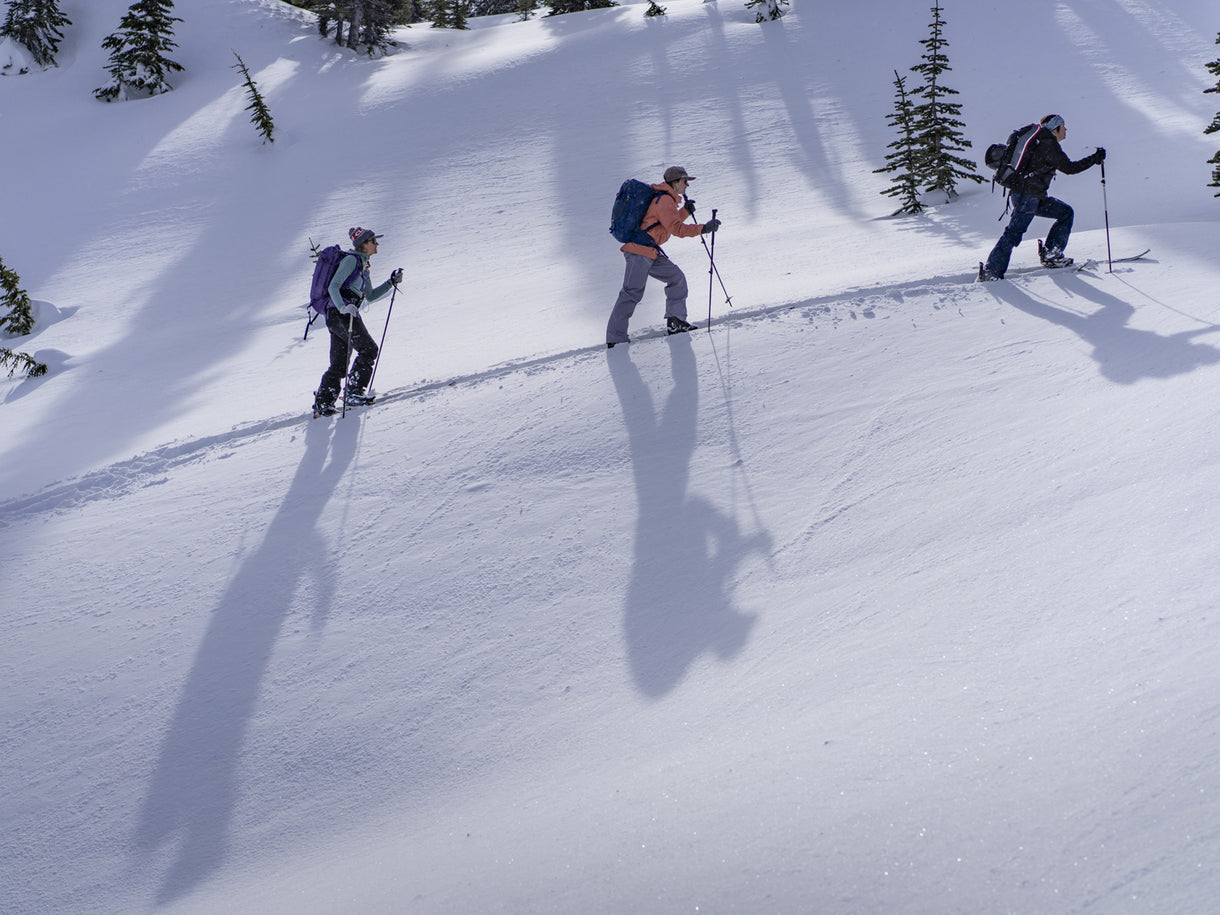
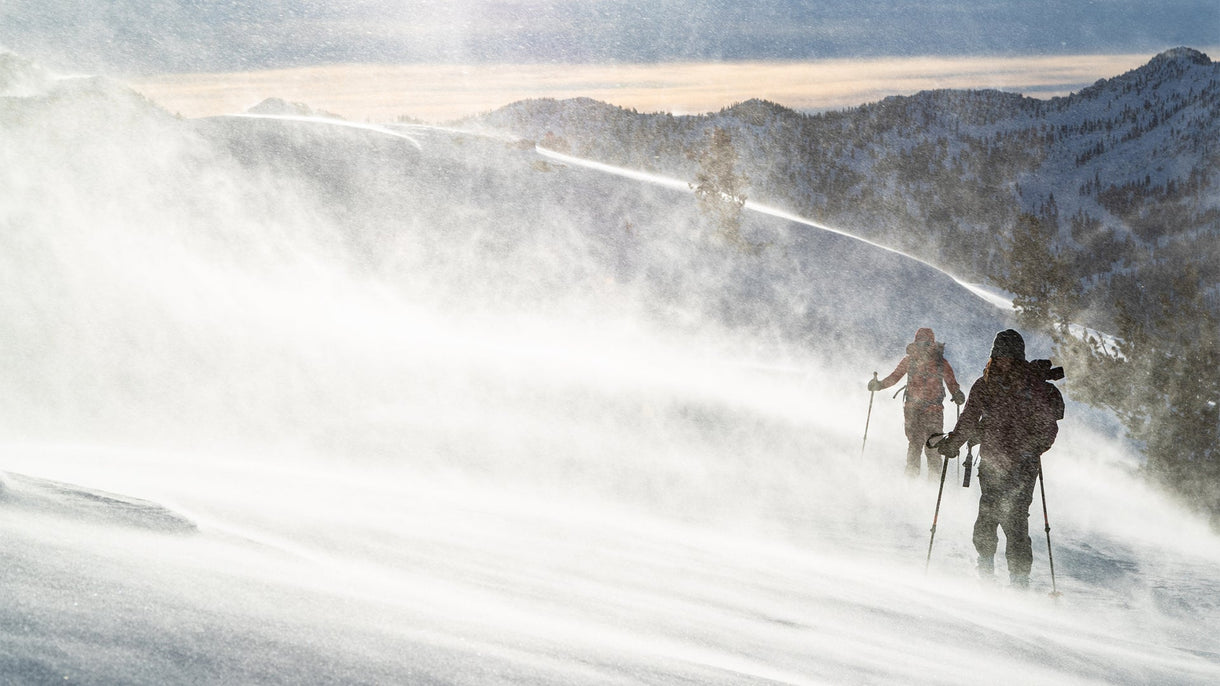
Looking across to Aoraki’s serac-laden Caroline Face there were signs of wet slabs in all directions. There had been an overnight freeze and we’d donned crampons for the climb up Ball Ridge, but we knew it was forecast to get hot today and that we’d need to manage the changing hazards.
We planned a turnaround time and got a move on towards Ball Pass. The landscape was a post-glacial mixture of small valleys, rocky ridges, and mounds. It’s the kind of terrain that makes for enjoyable easy-moderate mountaineering, all in the shadow of Aoraki’s bigger objectives. While we saw few other people, in the 1970s the hut and local climbing was a perfect spot for a budding alpinist to hang out and learn from the old-timers.
A fourteen-year-old Roy Smith did just that in 1971, setting out by bike from Wellington. Roy and his friend visited a couple of Canterbury ski fields before pedalling their way to Aoraki Mt Cook Village. All the action was at Ball Hut though, so they hopped on the bus to chance their hand at skiing and peer up at the glaciated Main Divide peaks. It wasn’t long before Roy was back in 1974 for a mountaineering course, and today he is one of Aotearoa’s most experienced mountain guides.

Nick and Quintin depart the current Ball Shelter, which is the fourth iteration of Ball Hut. Photo: Kit Pascoe

The melting Tasman Glacier leaves both a terminal lake and crumbling moraine walls. Photo: Kit Pascoe
The mountaineering remained simple along our route, and Ball Pass was gained with only some enjoyable ski touring navigation and mellow glacier travel. Peering over the edge, we could see the Hooker Glacier and Lake. Behind us lay the Ball Glacier — once the site of a 1000-metre descent race to decide New Zealand’s National Champions in the 1930s and 40s.
After a short lap off Ball Pass, we turned our attention to Turner Peak. We toured into the basin under Pibrac, where snow clumped on our skins. We all sweated and shed layers as the basin baked in the sun. It needed little discussion. The heat, softening snow, and rising temperatures meant the avalanche danger was too high for a climb and ski of Turner. Quintin, Kit, and I retreated, sticking to the shadier aspects.
To descend we took a direct route down the creek below Caroline Hut, trading ambitious plans for better skiing and lower avalanche danger. Snow coverage ended as the creek turned into waterfalls, and we scrambled down on the true right until emerging onto the moraine once again. Where past skiers had ridden down the Ball Glacier almost to the hut, our route now featured downclimbing on ladders and ropes.

Bootpacking the final pitch to the top of Ball Ridge, high above Ball Shelter and the Tasman Glacier. Photo: Kit Pascoe
With the Ball Road bus service no more, we began the trek towards home. The final crux was clambering down avalanche debris, ice axe in hand, into Husky Stream to get around the 100-metre deep washout from 2019.
Like the old bus route through Husky Stream, Dave and Roy’s track to the ski tow—and any possible Ball Hut night skiing slope—have fallen victim to melting glaciers and collapsing moraine walls. With climate change and glacial retreat a halt to regular skiing at Ball Glacier was likely inevitable, but it was hastened by the fiery death of the Ball Lodge in 1977.
Trudging back down the old bus route was the final step of our Ball Hut trip, and a reminder that we’d spent more than 12 hours on our feet that day. I wish I could say we had beer and chips waiting at the car for us too, but we’d not been that organised. Worse, there are unsurprisingly no food shops open when you drive out of Aoraki Mt Cook Village at 9pm bound for Queenstown.
Quintin and I instead passed the time sending ski ideas back and forth, agreeing that our generation of Kiwi skiers has largely overlooked the Ball Pass area. In its heyday, Dave recalls seeing three buses a day to and from Mt Cook Village, and for Roy, Ball Hut helped steer him into a career in the mountains.
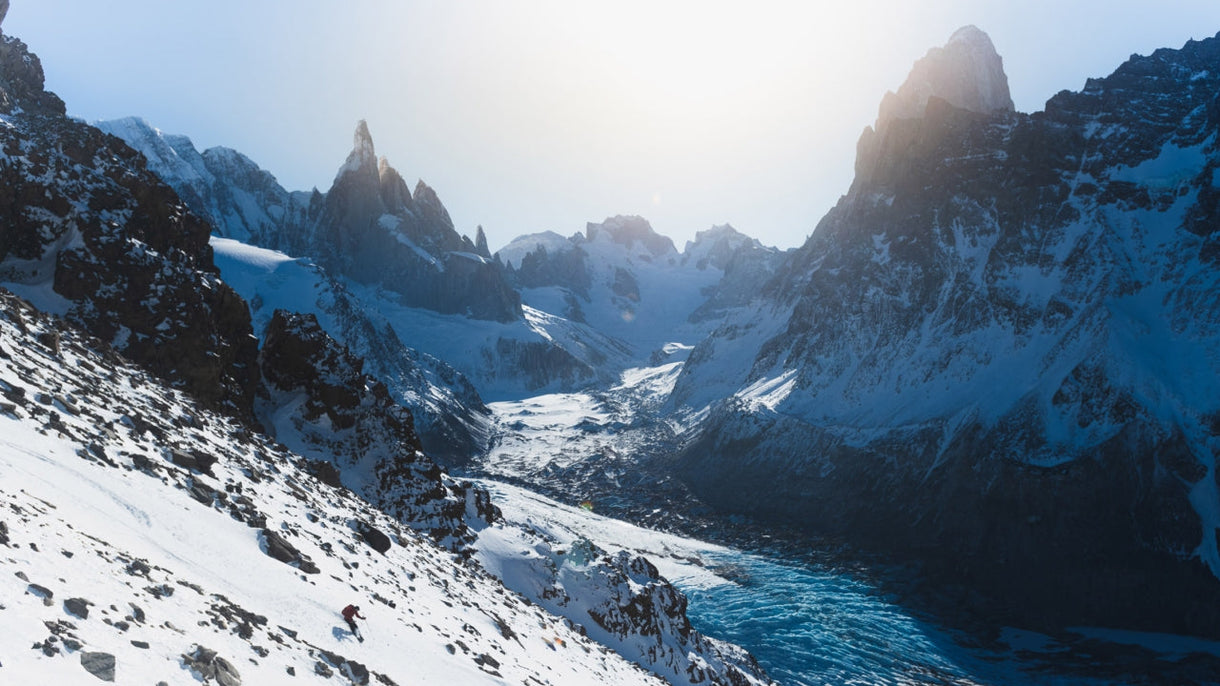
Today, the former national champs venue is slowly fading from collective memory, with the loss of the lodge, closure of the road, and deterioration of access to the Tasman and lower Ball Glaciers. But while there’s no longer a ski tow, hiking can reward you with a full range of ski mountaineering and touring experiences. From day missions to creative loops and traverses linking the Tasman and Hooker Valleys, Ball Pass remains a gateway to some of the Southern Alps’ most spectacular terrain.

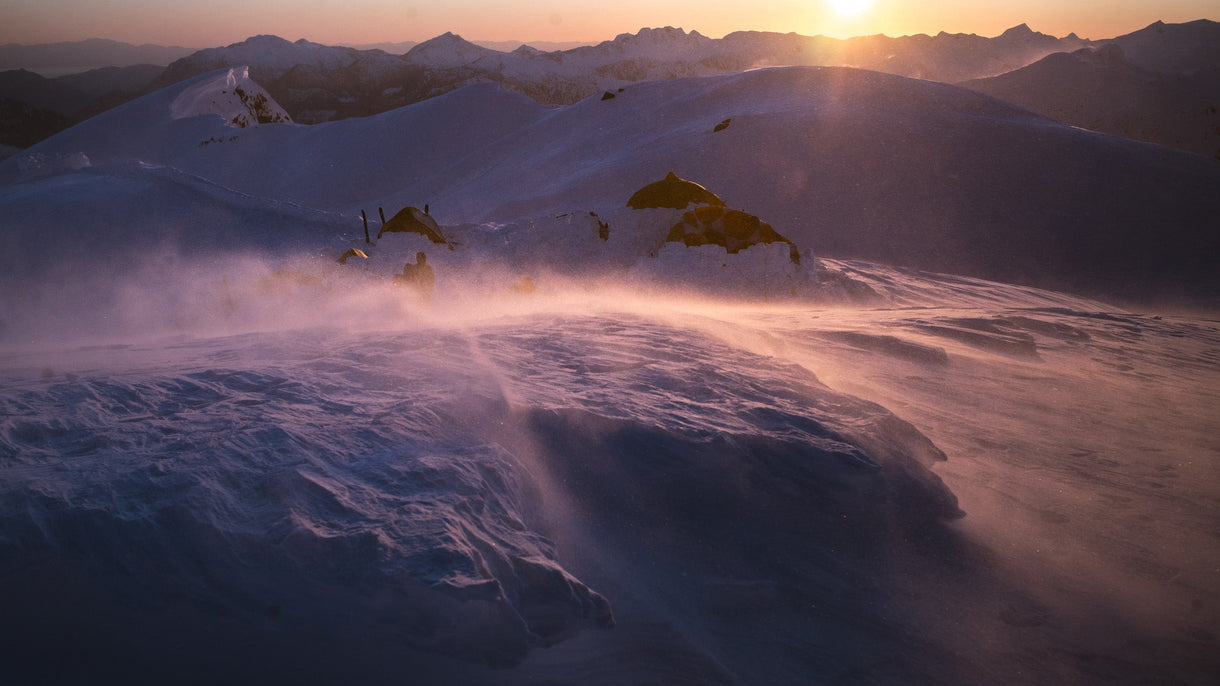
Sunrise on the Minarets and Mt Elie De Beaumont. Photo: Kit Pascoe
Thanks to Dave Fearnley and Roy Smith for recounting their personal memories of Ball Hut in the 1970s. Credit also to info sourced from ‘Mick Bowie - The Hermitage Years’ by Nan Bowie and the NZ Alpine Journal Archives.
Note: Since our November 2025 trip parties have both ascended and descended the new and not-improved Garbage Gully, however like a lot of mountain travel it is dependent on conditions, risk tolerance, skills, and equipment.








Nick’s an adventurer and engineer from Tahuna Queenstown, who’s at home on skis, in a kayak, or running mountain trails. He’s passionate about exploring new places and helping get more young kiwis outdoors. He also likes long trips with his cellphone off and cups of tea with friends in the mountains.