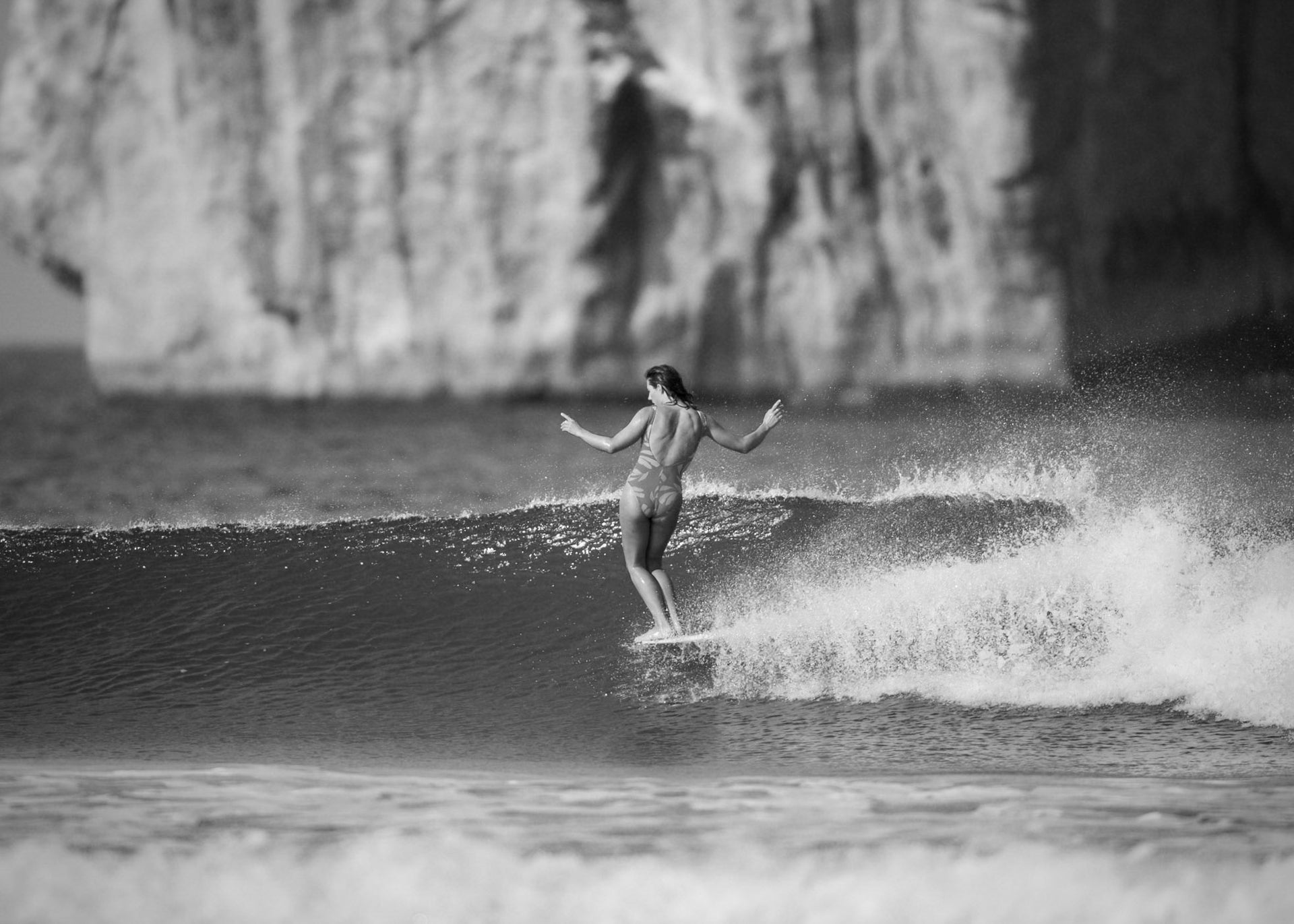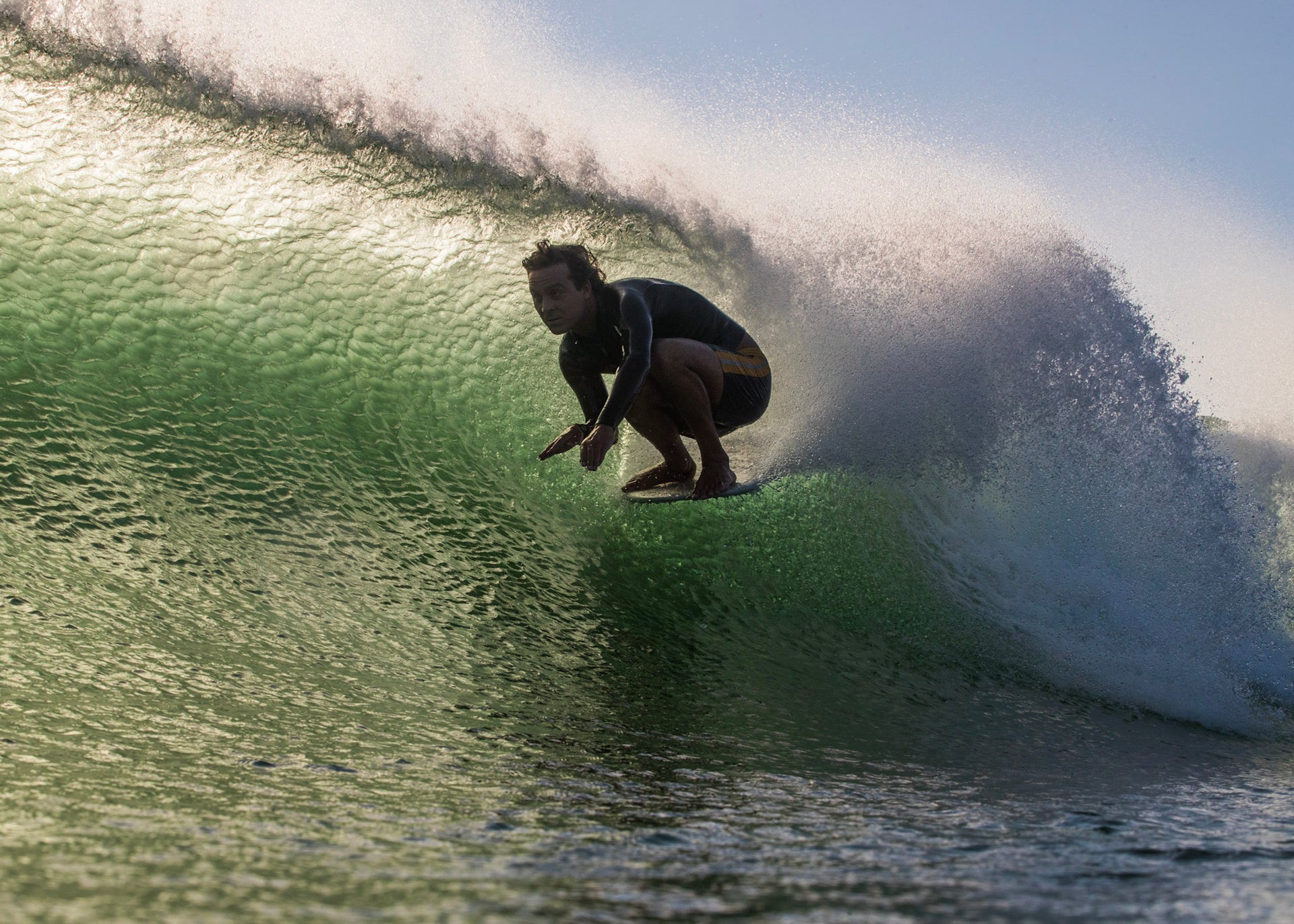
Opening image: Thomas Campbell films have always looked at surfing in different ways. Photo Grant Ellis

“These are the people who were left": Thomas Campbell on Yi-Wo

This September, artist Thomas Campbell premieres his latest film, Yi-Wo. It’s a departure from the instructive, easy listening of his earlier trifecta: The Seedling, Sprout and The Present. Instead, Yi-Wo leans into Campbell’s punk rock sensibilities and explorations of our dimensional selves, while capturing “the best surfers, with the best style, in incredible locations and situations.” We chatted with Thomas about the film he calls a “25-year-snowball,” and the importance of creating art that challenges viewers and reflects his evolving worldview.  


LH: Thomas, tell me about the last time you were absolutely delighted? 


TC: It was the other day. My friend Evan Hecox, who's an artist, he turned me onto this band, the Phi-Psonics. I bought two of their records. They're a little bit in the Alice Coltrane kinda spiritual jazz zone. It's something I haven't felt in a long time. It really changes my mood quickly and noticeably. It's just calming and it's so nice. I’ve been totally delighted by those records. 


When I think about your first three surf films – The Seedling, Sprout and The Present – I feel like they conjure a sense of delight; in the diversity of craft, in the light you capture, with the music. They’re such beautiful, delightful films. I’ve seen a couple of cuts of Yi-Wo, and it is markedly different in tone. Was that your intention from the outset? 


I feel like the first three films were more like educational films. They were pretty much like, ‘Hey, you could ride different things. You could ride this, and then you could surf like that person.’ And then if you went and you looked in the little fold-out, you could read who made the boards and what the dimensions were so you could order them.  I was just like, ‘Hey, you could do this different stuff. Check it out. Here's a bit of a road map.’ I did three films, and I thought there was no reason to be making that kind of film again. And the worlds really changed since that time. Obviously, we have a really fucked up political system in our country. It seems like things aren’t going great in a lot of places, in a similar way. And then the evolution of being a dad for the past eight years, trying to show up for my daughter, and then how that relates into the worldview. So, there's a bit more seriousness with Yi-Wo. I wanted to convey some deeper themes, but I feel like it’s also not extremely specific. It's kind of poetic. So, I feel people could come out of it with many different ideas about what they think it might be. And I think that's hopefully how art functions. At the end of the day, I got to work with my favourite surfers in the world and document the kind of surfing that I like to document and I think it looks fucking fantastic.  
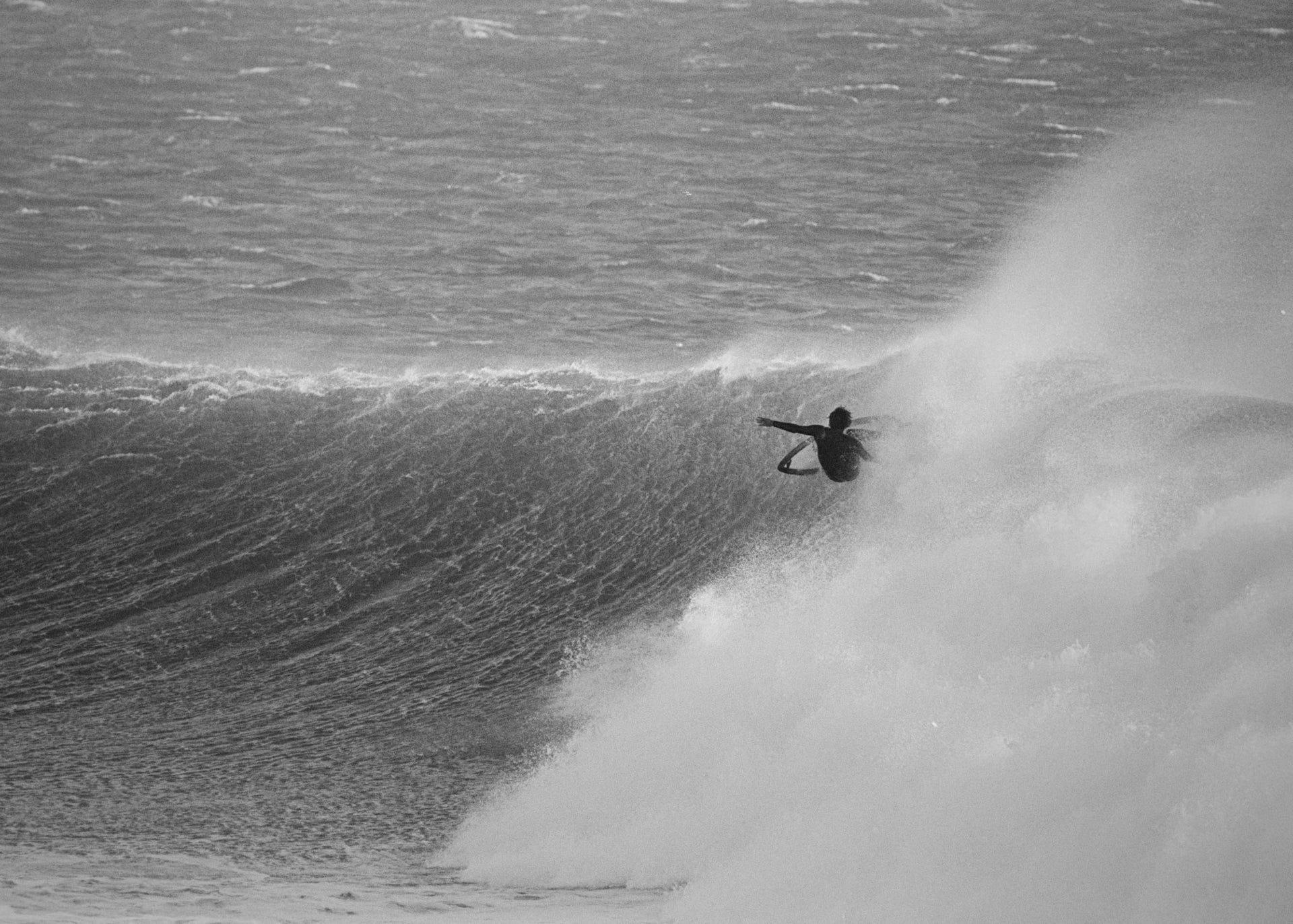
Dave Rastovich, North Africa

You’ve mentioned expecting people to feel challenged by Yi-Wo. Part of the challenge that I felt as a viewer was at times the dissonance of the music. It creates tension in the body in a way that’s atypical of the commercial surf dream sequence we’re all so familiar with.

I think with what's going on in the world, there has to be a bit of that tension. We made a lot of music for the movie and there is a through-line of tension in the soundtrack. The actual event of surfing has so many dimensions of tension. A lot of times, music doesn't actually coincide with that level of despair or intensity, or level of focus. I feel like some of the music dances with the visuals in a new way that I was really excited about.

What do you mean by ‘dimensions of tension’?

I mean, like yesterday I got pounded by three waves on the head, riding my 10’10”. I wasn't thinking about getting pounded when I paddled out. I paddled up to my friend, and I was like, ‘Well, I just got hammered.’ If you paddle out into triple-overhead surf and think about what that might turn into. Take Craig Anderson. Craig is smooth and casual in the most critical moments ever – but the dude pays for that. He's not a big guy but he's a tough dude. There's a level of intensity, sometimes despair, depending on who you are. And I like that. I like exploring that.

Who or what were you drawing on as sources of inspiration for Yi-Wo?

There's a great director named John Cassavetes, and I think he generally didn't work with much of a script. There would be like a dinner scene at a table, and he had all the actors there and he would just let it go. It would be one take, with one camera, for like 12 minutes. And that was it, warts and all. He was probably a bit of an inspiration. Then there’s the theme of the people in the in the film who are in costume. I've been inspired by people in costume all around the world. There are people in Tierra Del Fuego in South America who dress up in folkloric costume. There’s the Hopi in the US. I remember I stayed with some Cornish girls in this town called Padstow. They were telling me about this ritualistic day where everyone dances in the streets, and this person comes out in this costume. And in a way, it looks somewhat similar and echoes what that represented – the dark and the light. We’re kind of in a fucked scenario with the military industrial complex, especially in this country, and all the weapons all around the world. I just imagined those people were the post-nuclear people. It’s not so literal, but I think the dialogue says something like, ‘When the big rock came from the sky, these are the people who were left.’ These are the people who took refuge in the sea. It’s like a post-apocalyptic event.

And what survives…

I'm just not one of those people who’s invested in country. I just see us as weird animals living on a very strange planet, living within arbitrary, invisible lines that define us. So, it's just like the accumulation of the people who are left.

I watched an earlier version of the film without narration. I'd love for you to talk about the language you invented for the voiceover in the film.

Yeah, there are poetic passages in the film that kind of lean towards certain topics… but I think one of the main things I wanted to do in Yi-Wo is make something that was unknown. Ninety-nine percent of people are going to know none of the music in the movie. The way the visuals are coming across, the way it's paced – there's a lot of things that are not normal or usual. I wanted to put in these poetic prose passages and wanted them to not feel like English. I wrote them, and then some of them I sent to my friend Cliff Kapono, and he translated them into Hawaiian. And then he translated them back into English and the cadence is totally different. Then I took those and kept working on them. Then I sang them in a studio, and turned them backwards, so it's like backwards English. I just wanted there to be very little grasp of the known, nothing to hold onto too much. I called the people in the costumes The Last People, and I put in a lot of reverb and just made it weird. It's a fucking weird movie.

Karina Rozunko, Costa Rica. Photo Grant Ellis

Yi-Wo… where did the name come from?

I just made it up. I think I was driving with my friend, and she kind of mentioned something about it, or I mentioned something about it. I can't remember exactly and then I was like that’s cool. This other friend of mine, Fred Mortagne, he’s a French cinematographer, and he made a skateboarding movie called Menikmati which means ‘enjoyment’ in Indonesian. If you're a skateboarder and anyone says Menikmati, you know exactly what that means. And I always love that, and I love that it wasn't related to anything else. So, I just thought Yi-Wo is what this film is. It's some words that you can marry to the experience of the film

We went to North Africa together 10 years ago to shoot one of the sequences. That footage seems like a bit of a foundation for the making of this film. Did you know that Yi-Wo would be the film where that footage would land?

No. Well, that that trip was actually for a collective film that was supposed to be with Chris Malloy, Keith Malloy and Tiffany Morgan (Campbell). We were going to make a film together, but it just didn't happen. Visually, that stuff in Africa was just insane. I always felt beholden to all of you. We went there and got this thing, and then it was just like, sitting there. I was like, okay, I'm gonna make something with this. I feel like it was able to mature in a way – in trying to ask some deeper questions within the context of the film – that it wouldn't have if I didn't have that time. My brain’s like a rock tumbler – I put all these jagged rocks in there 10 years ago and maybe they're not all completely smooth, but they're smoothed out.

Do you see art and surfing and film as mediums, old ways for us to get back to our humanity?

Yeah, I mean, that’s kind of what I'm getting at. These Last People – that's just us. It's just a modified version of everyone. It’s like, hey, we're here and we're all going through these different things. Let's try to be together. Let's try to enjoy this and not be dicks to each other. Like I was telling you before, the outpouring since I've been publicising this movie is huge. It’s like a 25-year snowball – and there's a lot of people caught up in that snowball. I live in the woods, and I live a pretty lone-wolf kind of existence, so sometimes it's hard to know if people care, but I'm glad they do.

Al Knost, Costa Rica. Photo Grant Ellis

How much is it okay to risk in your creative life, for your creative life?

I mean, creativity could be anything. It could be anything for anyone. I just feel like a lot of times people put pressure on themselves, and they're like, ‘I want to do this, but I'm afraid.’ It's like, just take little steps. Art’s not all fun and games. Art brings up a lot of emotion. And it helps you face your shadows and things like that. So, art could be anything. For the person who has the nine-to-five job it could be like two hours on a Saturday where they sit down and doodle on some little canvases with paint. Or they could try to do it for five hours on Saturday and then try to make it into a job. A lot of times people will tell me, ‘Oh, I wish I could do what you do.’ And I think, you're insane, you know? If I could have a tincture bottle of the despair that I’ve felt in my life at certain points from my path, and I could put that tincture on their tongue and give them the little drops of that despair – they might not have ever experienced that level of despair before. I think it's do what you feel, and it's all learning, right? You aren't going to learn unless you try. It's interesting for me, even with Yi-Wo, dude, it took so long to figure out how to make it look and move and flow like it does. I did everything and a lot of it wasn't working for a really long time. But I guess it's persistence. I think one of my greatest qualities is persistence. It’s just showing up. If you show up, stuff can happen. If you don't show up, it ain't gonna happen.

People have come to expect certain things from you and your filmmaking. Has there been pressure to create things in a certain way? Or are you just immune?

I probably didn't even need to make The Present, but I had some really good footage left over and that made me do it. When that was finished, I didn’t think there was a reason to do another. Those are kind of in the traditional surf movie template like MacGillivray-Freeman or Bruce Brown or Witzig. I really walked in the footsteps of the forefathers of that genre. In a sense, Yi-Wo potentially could be the most – I don't think it will be, but I think it could be – the most uncommercial of all of them. It was what I needed to make, and I think I found a new voice. In this day and age, people, they're on their phones. They're looking at quick little clips, like everything's quick, quick, quick, quick. I have this beautiful footage, and it's of the best surfers, with the best style, in really incredible locations and situations. I was just editing, and I'm asking, what does this want to be? Hmm, this feels like it wants to be six minutes of slow motion. Fuck it. I think it could be challenging for someone who doesn't have an attention span. But my thought is that it’s a celebration of amazing aspects of what we have going on, on this planet. And if you don't have time to celebrate this life and be with these beautiful moments, what are you doing?

The Australian premiere of Yi-Wo is on September 11 in Byron. You can buy tickets here. All proceeds benefit Surfers for Climate.

Opening image: Thomas Campbell films have always looked at surfing in different ways. Photo Grant Ellis

Subscribe

"I recently discovered Roaring Journals... wild, cool people doing wild, cool things."

Related Stories Related Stories Related Stories Related Stories Related Stories Related Stories Related Stories Related Stories Related Stories Related Stories