Opening image: The nightmare scenario – Rodrigo Reinoso caught inside at Teahupo'o. Photo Ted Grambeau

Life at the end of the road: Teahupo'o is serene... mostly

In the small Tahitian village of Teahupo’o, there exists an unspoken agreement between the dogs and the chickens. In the absence of fences, they all roam free around town together, doing their thing, the dogs leaving the chickens in peace. The dogs have repressed their natural urges to make lunch of the chickens, although the dogs’ owners may have played a part in this conditioning. The chickens know they’re safe and really play it up, strutting around like they own the place.


But one May morning a few years back, the agreement was broken.


I was sitting down on the point, about to paddle out to the reef and surf, when a rooster flashed past with a village dog in hot pursuit. The rooster was a royal specimen; his blue, gold and green sheen reflecting the morning sun, shooting past like a comet. The dog was young, all legs and paws, and no match for the rooster, who’d flamboyantly chicane left and right to keep the dog just out of range. He had the dog covered and he knew it. The rooster seemed to be taunting him. If he could talk, the rooster surely would have done so with a French accent.


The rooster then planned his coup de grace. He’d hook-turn up the driveway of the neighbouring house and disappear into the yard. His only problem was that today—for the first time he’d ever encountered—the neighbour had shut the gate. A cloud of bright feathers swirled in the still morning air and that was that. Watching on, a saying about roosters and feather dusters came to mind. By the time the feathers had settled on the manicured lawn the rooster was gone, the dog was looking for somewhere to hide, and daily life in the village had returned to normal.


As a surfer, there’s a metaphor here.
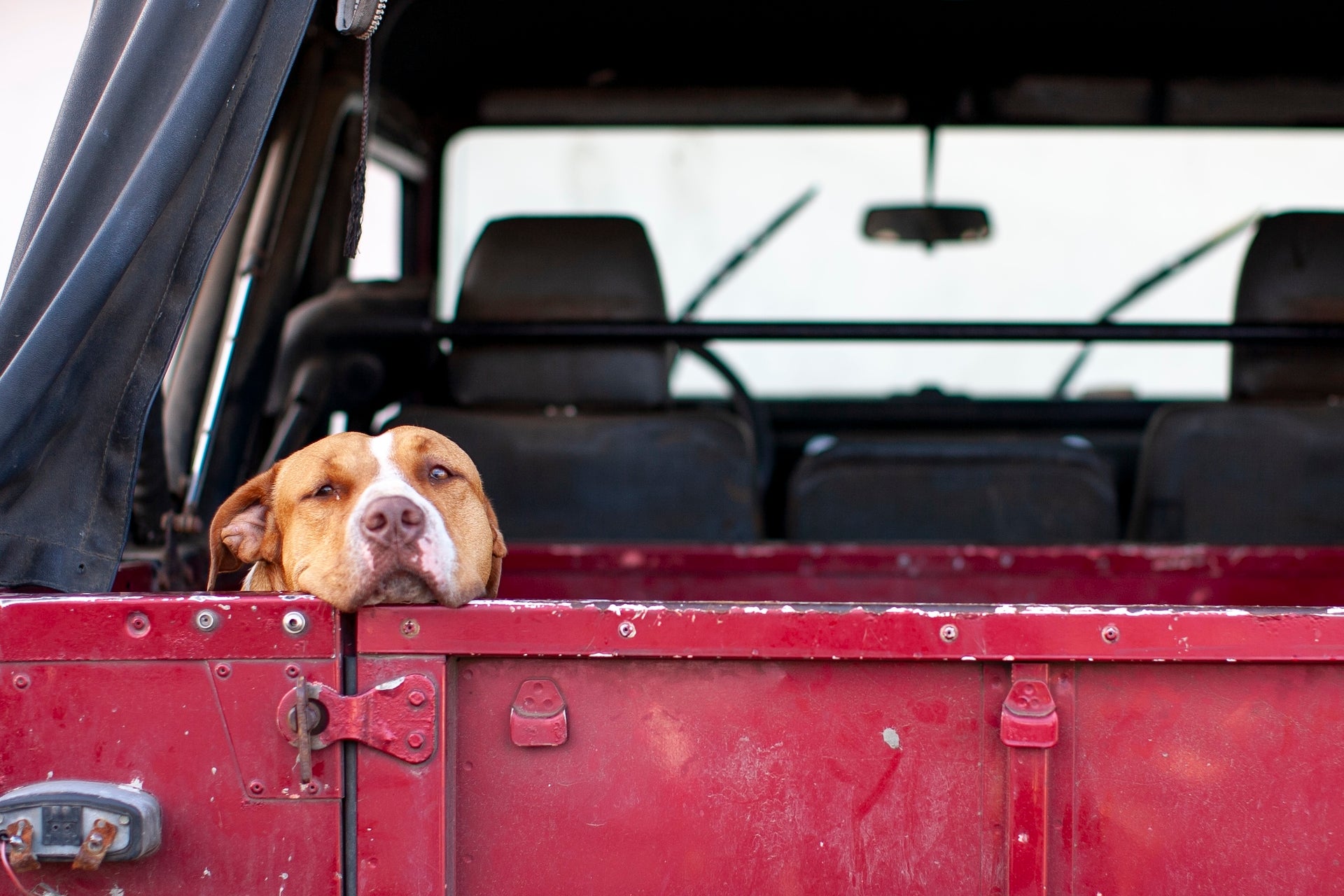
Tahitian car alarm. Photo Ted Grambeau

Arriving in the village at Teahupo’o, you can be lulled into a tropical torpor. Like a living Gauguin painting, at certain times of the day, village life becomes still life—the palm trees barely swaying, the dogs sleeping, the locals raking leaves in their yards as a meditation, the hibiscus and frangipani trees adding brushstrokes of colour while the volcanic backdrop acts as wallpaper to a scene so perfect it casts a spell on anyone who walks through it. As you go about life here at the End of the Road the gentleness of manner strikes you, but as a travelling surfer, you know there’s a latent savagery awaiting you on the next swell, out on the reef just offshore.

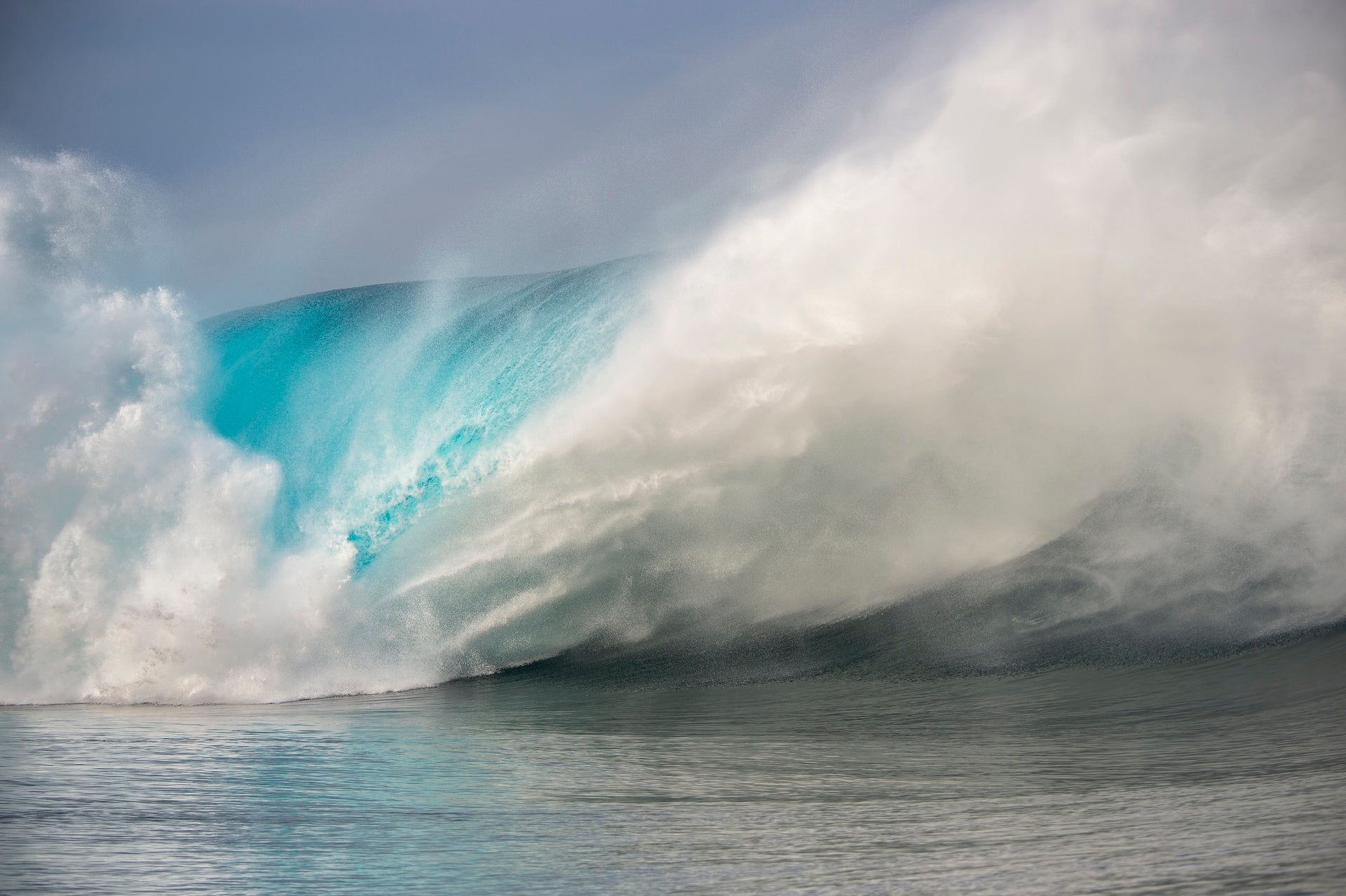
The arrival of the wave at Teahupo’o isn’t signalled by an indicator reef or the horizon darkening. You’ll be sitting in the lineup lost in a Tahitian daydream when you’ll look below and to your astonishment, you’ll see the reef moving. Only it isn’t the reef moving... it’s you, and you’re being pulled out to sea, toward a set of waves you can’t yet see, travelling below the surface of the ocean. The wave—once it’s dragged all the water off the reef and has shown itself—for a short second seems to stop dead, before the rest of the South Pacific catches up, loads up behind it, and the whole thing roars down the reef. The force is one thing; the form is another. While it can be the most violent wave in the world, it is drop-perfect violent. On big days, watching it do its thing is can feel like science fiction. Waves aren’t meant to do that.

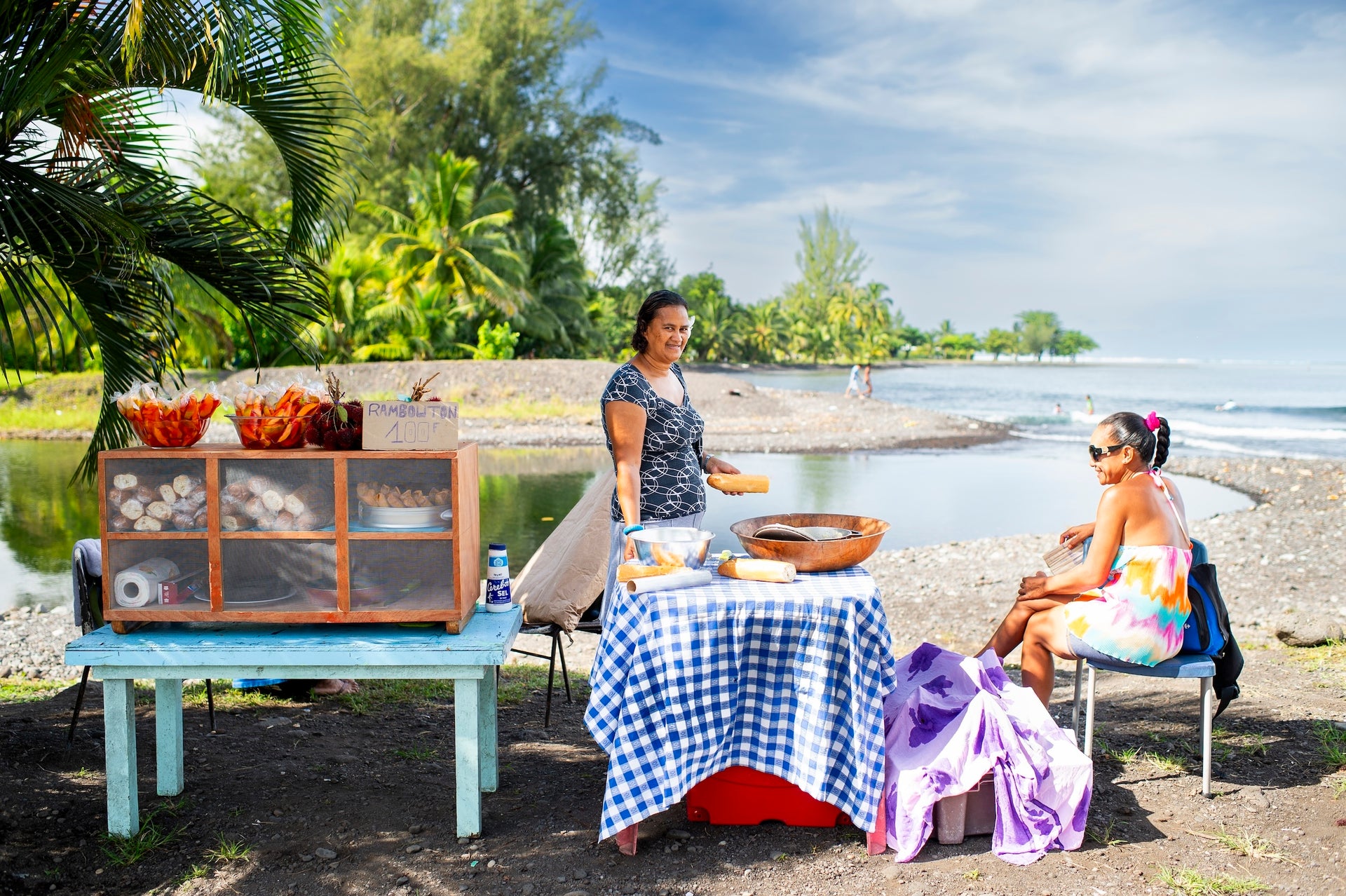
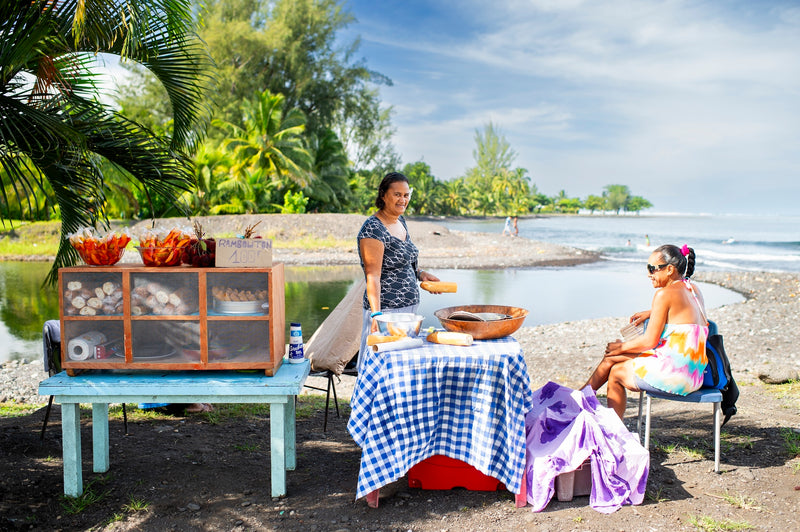
The universal baguette. Photo Ted Grambeau

To grasp how this is all possible, the groaning natural forces at play here, you need to understand the bathymetry. The easiest way to do so is to look at the mountains towering abruptly behind the village and then imagine the ocean just beyond the reef dropping away just as sheerly, a thousand feet deep. The islands of Tahiti, birthed volcanically just a few million years ago, rise steeply out of the sea floor, and the full force of the South Pacific slams into them with nothing to slow it down.

Maybe a dozen times a year, Teahupo’o will get hit with serious swell, but maybe once a decade a swell lands that crosses the line and becomes something otherworldly. The ‘Code Red Swell’ of August 2011 is still regarded as the biggest day Teahupo’o has ever been surfed. The swell was forecast to build overnight, and sleeping on the floor of a local homestay I could feel a tremor coming up through the floor as waves detonated out on the reef. I was sleeping next to a small cabinet of ceramic figurines —cats mostly—and with each set of waves the cats would rattle on the glass. By dawn they were dancing.

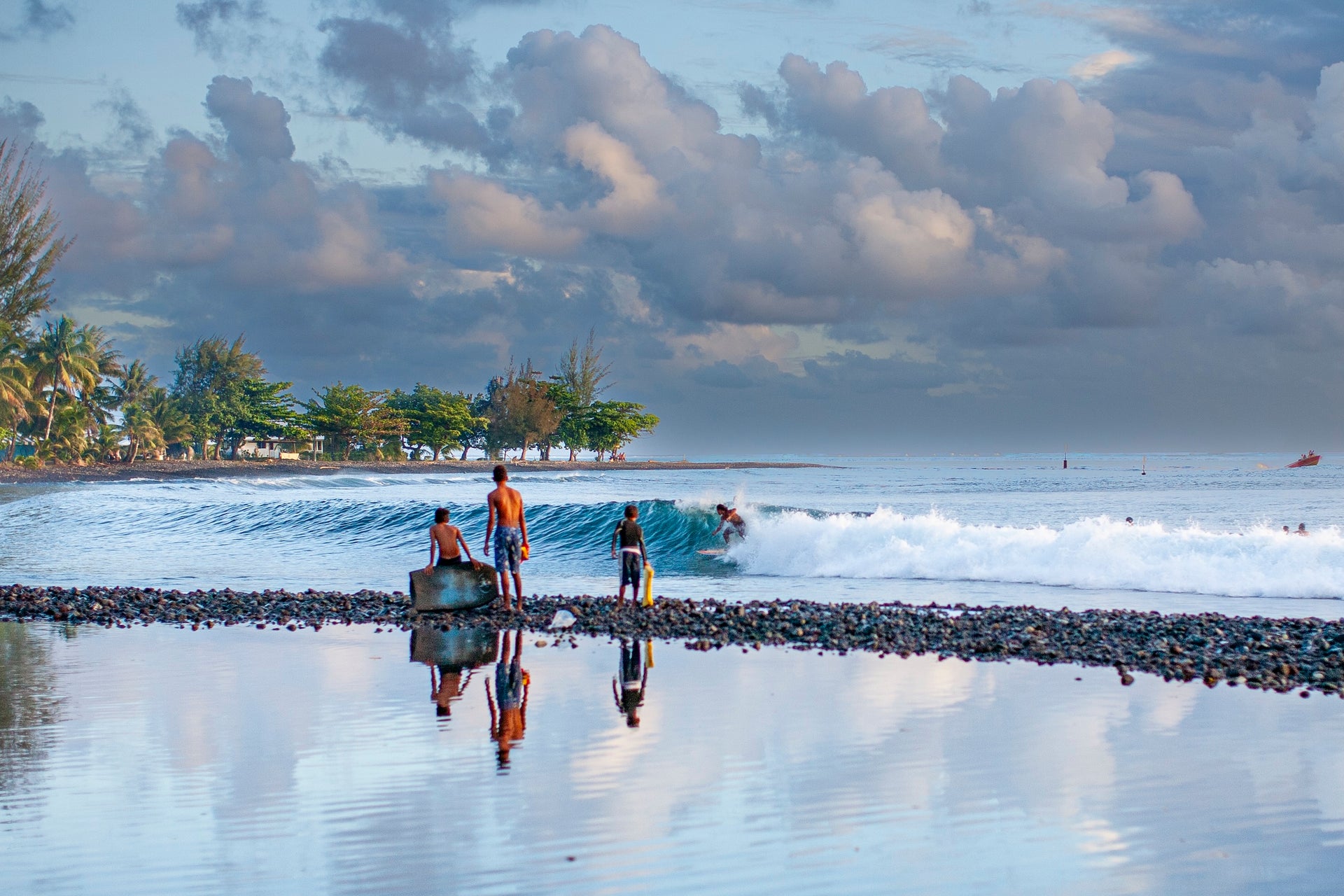
The kids rule inside the lagoon. Photo Ted Grambeau

I walked out to find the lagoon surging into the front yard. I watched a refrigerator float past on its way out to sea. Out on the reef everything was churned white. Soon after, local surfer Raimana von Bastolaer was dropped off the back of a ski onto the cobblestones, his shorts shredded, has back shredded, the rest of him already turning purple after being bounced across the coral reef and into the lagoon. He was lucky to be alive.

“Call it off!” he yelled, grimacing. “Shut it down!” The swell was given its name after the local coast guard had declared a Code Red, preventing all craft from leaving shore. Nobody had listened.

There are days when it’s even too big for the locals, but not many. A couple of generations of Tahitian surfers now have mastered the dance out there to the point they stand in these giant tubes superbly relaxed, like they do everything else in their daily life. The unhurried manner of the Polynesians mixed with the nonchalance of the French.

But it’s not huge every day. For most of the year the wave looks just like any other tropical reefbreak, anywhere else in the world, and life in the village remains sleepy. For while the wave at Teahupo’o has changed surfing, village life remains largely as it’s always been, the locals going about their day—fishing or gardening mostly—just as they had for centuries before surfers arrived.

The fury of Teahupo'o. Photo Ted Grambeau

The village of Teahupo’o sits at the end of the road on the southwest corner of Tahiti Iti. Beyond the village the mountains make the way impassable, so the road ends. You’re in a boat from this point. There are just over a thousand people who call Teahupo’o home. It has one magasin (supermarket) and a small row of thatched ‘snacks’ (restaurants) looking over the lagoon, serving beers, baguettes and poisson cru. A concrete wave at the turnaround where the road ends is the only concession to tourism—day-tripping, nonsurfing tourists out from Papeete stand inside it for the obligatory photo, posed awkwardly. Most leave disappointed their visit hasn’t coincided with the kind of swell they’ve seen on social media. “Is that it?” they ask nonplussed, pointing to the thin white line out of the reef, before driving back to town to drink cocktails by the hotel pool.

Wherever a wave like Teahupo’o has been discovered in other remote corners of the world, surfing has tended to ruin the place soon after. The surfers stumble upon these magic corners, the money follows, the rest of the world moves in en masse and the magic floats away on the breeze. Teahupo’o in many ways stands as the most remarkable of exceptions. In three decades, it’s barely changed.

Roadside atu. Photo Ted Grambeau

There is a thriving micro-economy—largely made up of charter boats out to the reef and small family pensions and homestays catering to visiting surfers—but the boats and homes were all part of the place already, just repurposed. There are no resorts or hotels, visiting surfers brought into family homes with their adopted ‘mummy and poppy’, often coming back and staying there year after year, slowly becoming family themselves.

Wedged between the lagoon and Tahiti Iti’s impenetrable mountainous interior behind it, the village footprint hasn’t changed. It can’t. Families have lived on this thin ribbon of land for generations, the land passing down. Family stories are tied to it. Real estate speculators are wasting their time.

When it was announced that Teahupo’o would host the surfing event at the 2024 Olympics, however, many believed it was the beginning of the end at the End of the Road. The world’s largest sporting event held in the world’s most idyllic, fragile and remote surfing corner. Change seemed inevitable. Indeed, the early signs weren’t good. The machinery rolled down the single lane road from Papeete to build a new bridge in town and a three-storey judging tower out on the reef. Locals however were having none of it. They held their ground and pushed back. The village has hosted big surfing contests for two decades, but always on their terms. These contests are welcome... but welcome to leave the place as they found it. The annual world tour surfing event, held at Teahupo’o for 30 years, is packed up into a shipping container once it has finished. In the end, the locals won. The original plans for the Olympics were scaled back to something more modest and less permanent.

Travellers. Photo Ted Grambeau

When the Olympics started and the focus of the world was out on the reef—watching Gabe Medina float through the air like some levitating deity, giving the Olympics its viral moment—back inside the lagoon the local village kids surfed the black sand rivermouth wave, riding old yellow hand-me-down surfboards, totally oblivious to any large global sporting event that might be happening in the general area. Life rolled on in the village. Even when local Tahitian surfer Kauli Vaast won the gold medal—the Gods gifting him the only good wave in the gold medal final—the party, which lasted for weeks, quickly moved into town.

In the days after, the Olympic site was quickly dismantled, packed up and hauled away. By the end of the week, you’d barely have known it had even been there. Teahupo’o fell quiet, only the laughter of the kids in the shorebreak and the occasional boat engine in the lagoon breaking the peace. The dogs and chickens reclaimed the point—the dogs sprawled on the grass, half-asleep but always watching, the chickens keeping their ground, a bit less cocky these days.

This story features in Roaring Journals Edition Three:
order your magazine here.

Opening image: The nightmare scenario – Rodrigo Reinoso caught inside at Teahupo'o. Photo Ted Grambeau

Subscribe

God Creates Dinosaurs. God Destroys Dinosaurs. God Creates Man. 
Man Destroys God. We Create Roaring Journals.

Related Stories Related Stories Related Stories Related Stories Related Stories Related Stories Related Stories Related Stories Related Stories Related Stories