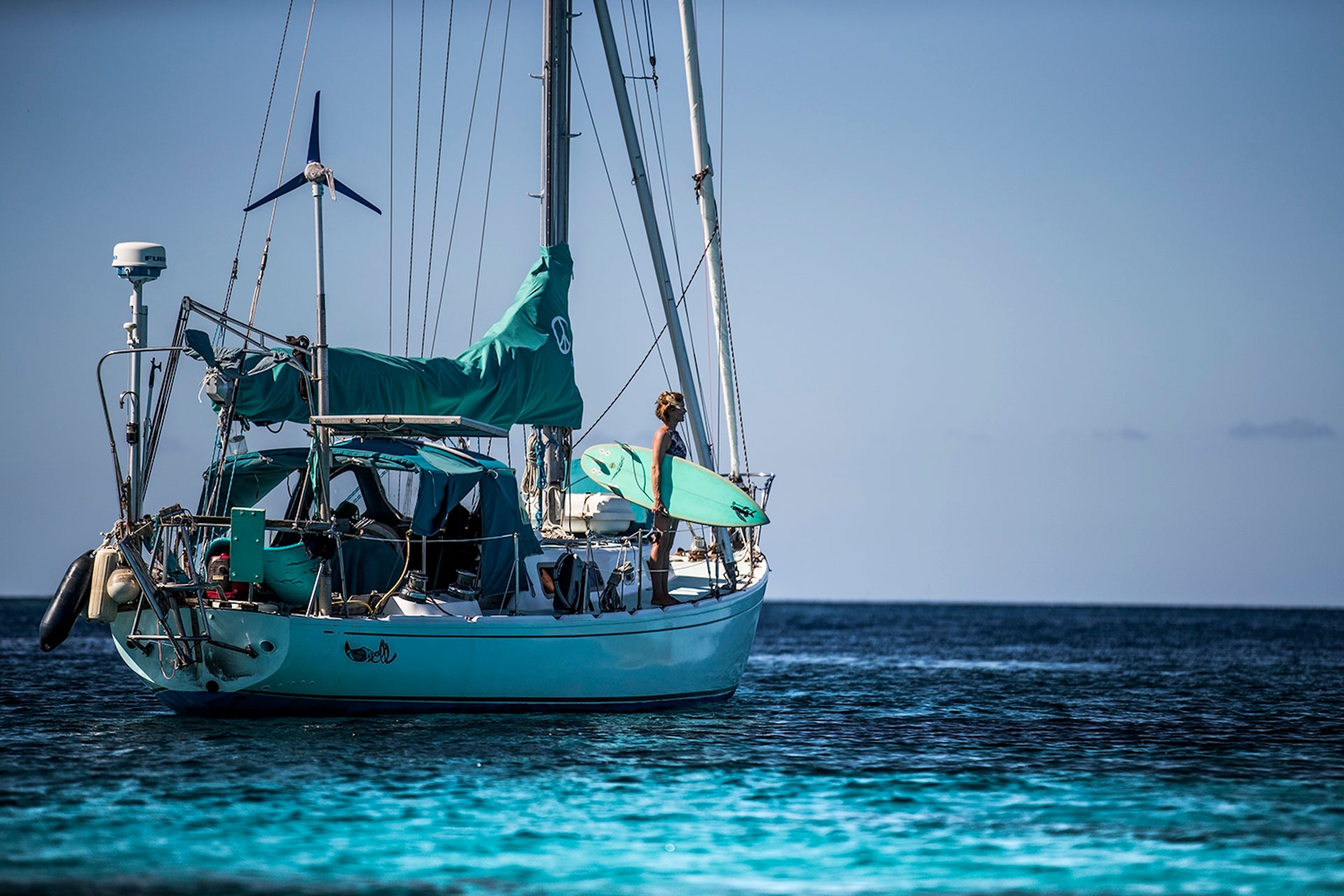
Opening image: Captain and companion in their floating car, heading home to their blue water chariot. Photo Jody MacDonald

RITES OF PASSAGE—what we carry back

Becoming an adult didn’t happen quietly for most of human history. It was marked. At some point, a young person was asked to leave the familiar behind and meet risk, responsibility, and the natural world face-to-face. These coming-of-age experiences weren’t about conquest or achievement. They were about transformation.


In today’s world, most of us move from childhood to adulthood through graduations, paperwork, jobs. The transition is subtle, often unacknowledged. But I believe for many of all ages, the desire for a defining journey hasn’t disappeared. It shows up in our longing for wilderness, for challenge, for experiences that ask something real of us.


In today’s world, voyaging across a stretch of water is one of the best rites of passage available to us. When I left California aboard Swell, I didn’t have language for it yet. I thought I was chasing waves, freedom, simplicity. And I was. But beneath all of that was something older and more human: a need to be tested by nature, to learn my limits, to find out who I was when comfort and certainty fell away. To find my place in the world and beyond.


After digging into what rites of passage look (and looked) like across cultures for this piece, it’s clear they share a common shape. First is separation, stepping away from what’s familiar. Then, a period of challenge, vulnerability, learning, and often solitude. Finally, return—coming back with new knowledge and responsibility to the community. In most examples, nature is not just the backdrop; it is the teacher.
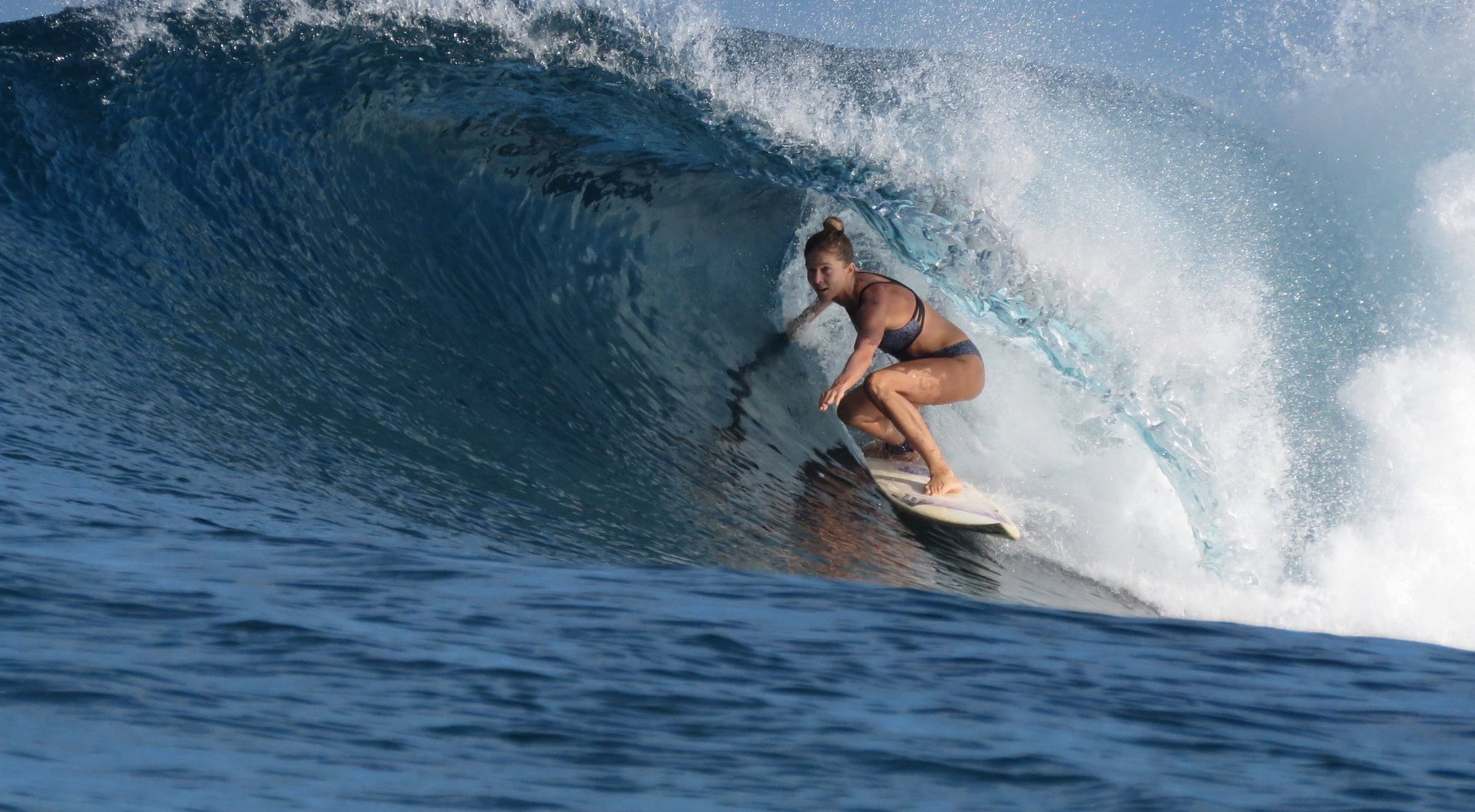
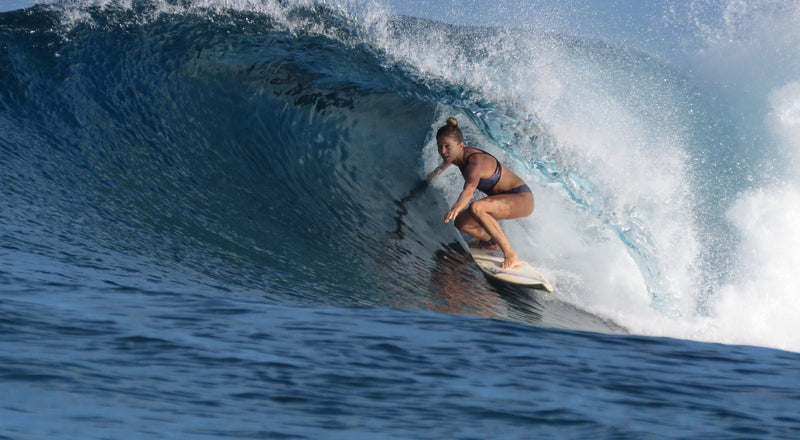
Liz's favourite reward for crossing oceans. Photo Tahui Tufaimea

In many Native American traditions, young people embark on what outsiders have called “vision quests”, fasting and travelling alone in nature to seek spiritual connection, guidance, and purpose. For Aboriginal peoples of Australia, it’s been described as a “walkabout”, where one heads off alone into the bush to deepen knowledge of land and self. In Japan, the Yamabushi practice Shugendo, with hardship and exposure to the elements in remote mountain terrain.

Some of these traditions were not defined by gender, in others, women’s rites looked a bit different. Many cultures understood that the profound physical and hormonal shift of a girl’s first menstruation needed context, meaning, and guidance. So young women often entered a period of seclusion where they were guided by older women in bodily knowledge, responsibility, and their connection to natural cycles like the moon and seasons.

Although the traditions vary widely, it seems that in general, these initiations into adulthood aren’t about escape; but about returning to your society with greater awareness. 

Voyaging, whether alone or with a small crew, naturally recreates the conditions that traditional societies knew helped us grow and gain perspective. Life aboard Swell stripped things down quickly. There was no room for distraction, no illusion of control. The moment the anchor was lifted, there was an unmistakable separation from security. 

South Pacific surf check from the Swell deck. Photo Jianca Lazarus

As the boat moves offshore, the roles and identities that define life on land begin to dissolve. A simpler, more immediate set of responsibilities take their place. Attention narrows to what is essential—weather, navigation, food, water, and the wellbeing of the vessel that holds my life afloat.

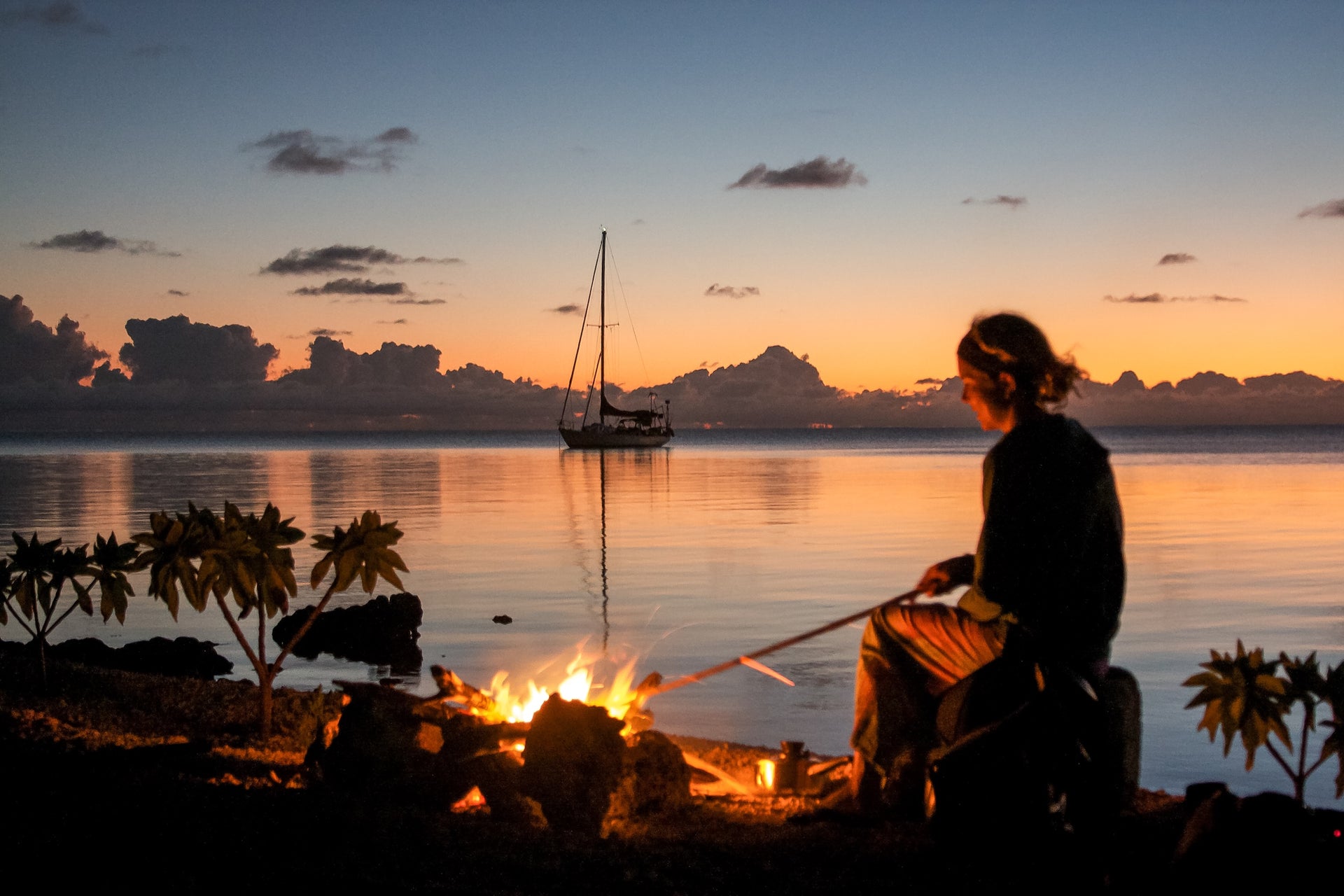
The abundance of land life also disappears. Fresh water is finite. Provisions limited. Power and fuel measured carefully. Even small decisions carry weight, because the margin for waste is so slim. That steady mindfulness shifts your relationship to consumption and comfort, replacing unconscious habits with gratitude and intentionality. Simple things like a dry bunk, a warm meal, a calm anchorage begin to feel like luxuries.

There is also the ever-present knowing that you are moving through forces larger than yourself. Uncertainty is a constant. The sea conditions do not care about your plans. Progress is never entirely yours to control. Existing persistently in uncertainty and vulnerability has a way of softening the ego and enhancing respect and awareness. 

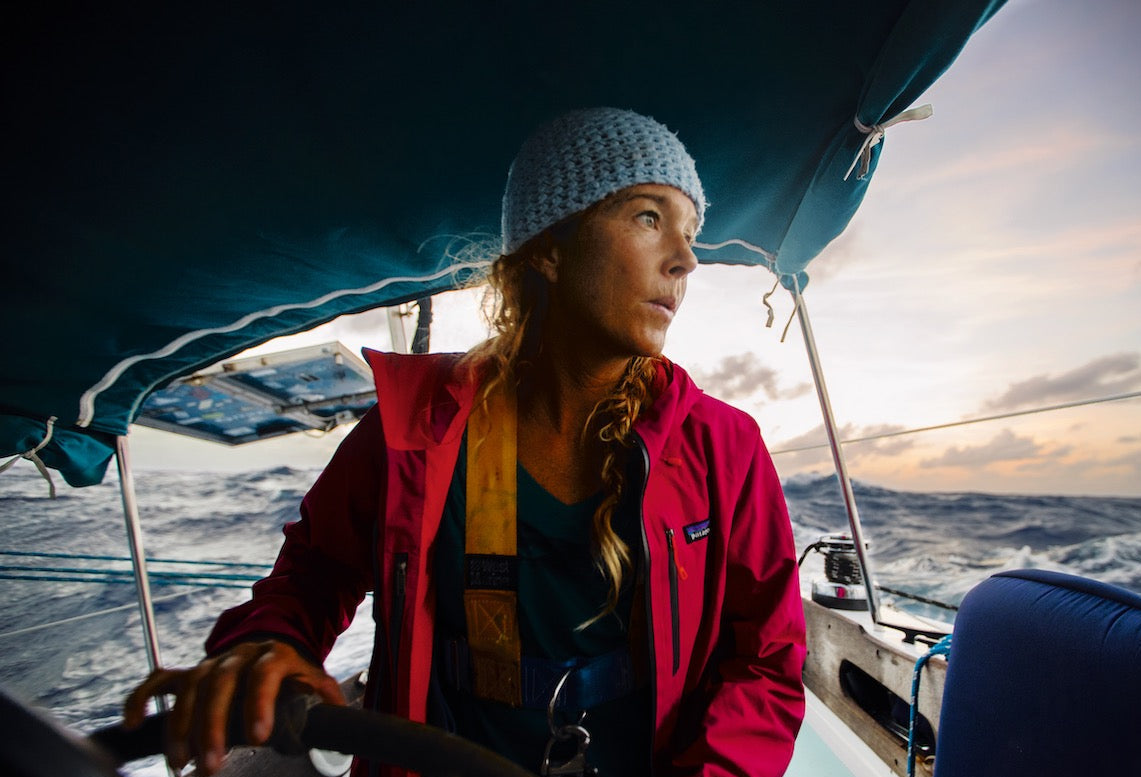
Discomfort is just part of it. Long watches scanning the horizon out in the elements, enduring interrupted sleep, damp clothes, deep fatigue, and the persistent motion of the boat slowly wear away the expectation of ease. Over time, the body and mind adapt. What at first feels unbearable becomes manageable, then normal. Tolerance to suffering grows through repetition and necessity. Being surrounded by the beauty, power, and grace of the ocean dissolves discomfort into gratitude to be a witness.

And once vulnerability and being uncomfortable become more familiar, there is also space for reflection—lots of it! The lap of water on the hull, the clear horizon, the absence of distraction all creates a mental landscape where thoughts have more room to surface, to be examined. Whether you’re solo or trading watches, there are quiet hours that invite contemplation, self-reflection, and perspective that is harder to find in the hustled pace of life on land.

South Pacific surf check from the Swell deck. Photo Jianca Lazarus

Voyaging demands competence, too. You must learn to fix what breaks. You make critical navigational choices. You learn to care for yourself and those aboard with you. You find solutions. And each problem solved becomes a small but tangible reinforcement of your capability, constructing self-confidence that can’t be manufactured through staying comfortable.

Voyaging or otherwise, these trials in wilderness undoubtedly accelerate inner growth. Nature is an unrelenting mirror. It’s quick to show us our weaknesses and how little control we actually have. These journeys ask us to step into our own relationship with nature, spirit, and self. They build confidence through firsthand experience, not praise. Through failure and error. Through waiting and wanting.

Pre-voyage, I wanted everything to happen immediately. “Waiting” brought on an unpleasant inner ache, an urgency. But time at sea taught me that waiting isn’t wasted time. Patience is where the best rewards are quietly taking shape. When I listened closely, stayed present, embraced the wait, outcomes were generally more favourable, maybe even a marvellous surprise. Wind in my favour, a jaw-dropping rainbow, an empty wave near the anchorage, a lesson learned before it became a disaster.

Out there, mistakes are immediate and consequential. The wild asks us to listen, observe, and dissolve in order to survive. Storms, hunger, fear, and pain teach us to be humble, dig deeper, pay attention. To work with what is given rather than forcing what we want. To prepare better. To adapt instead of resist.

The self-steering vane broke on this stormy passage, meaning long hours at the helm. Photo Jianca Lazarus

Testing yourself in nature teaches discernment. You differentiate wants from needs. You learn the difference between the fear that protects you and the fear that limits you. You learn when to push, and when to wait. And over time, you develop the most important kind of trust. Trust that you can meet difficulty without collapsing. Trust that you can adapt. Trust in your intuition. This kind of confidence becomes a life ring on the inside that you can reach for long after you make landfall.

Being in nature also comes with the steady presence of awe. Her unbelievable details, ecosystems in perfect balance, night skies unpolluted by artificial light, wildlife encounters that take your breath away. These moments have a way of placing our personal concerns into a broader context. Awe stops us, humbles us, and also connects us. It reminds us that we are part of something larger and older than any individual story.

A true rite of passage softens us. Being humbled by nature strips away entitlement. You learn to stop seeing the world as something to extract from and start seeing it as something to belong to. You become more careful and conscientious with resources, relationships, and words.

This humility is deeply needed in modern culture. We reward loud over subtle, speed over presence, dominance over reciprocity. But the natural world teaches a different ethic: listen first, move slowly, respect limits. Voyaging asked me to practice that ethic daily.

It also taught me how to stay present when things hurt. How to sit with emotional discomfort. How to let sorrow move through me without needing to fix it. When you’ve been alone at sea with fear, exhaustion, and doubt, you learn that emotions, even overwhelming ones, are survivable.

In the ocean wilderness, appreciation for what's fundamental grows–a secure anchorage, food on the fire, nature's marvel. Photo Liz Clark Collection

Although loss and hurt often don’t make sense, nature taught me how to grieve without giving up. That we are part of that miraculous cycle of life and of death.

Traditional rites of passage end(ed) with return. The initiated individual comes back changed, ready to contribute with greater wisdom, awareness, and care. Being separate from family and community, teaches us appreciation for them. You are reminded that survival and resilience are much easier together. Compassion for others—human and non—comes more easily now, because when you’ve been humbled, when you’ve suffered alone and survived, you tend to move more gently through the world.

I am no different. After more than a decade living my rite, my dream, there was an unmistakable feeling of responsibility to share the lessons and give back to the ocean and the people who gave and still give me so much.

Voyaging offered everything I needed for transformation, but it also asked something in return. Respect. Advocacy. Restraint. Generosity.

Voyaging didn’t make me a hero. It made me more accountable. More aware of my impact. More committed to treading lightly and protecting the places and beings that shaped me. Made me care about how my actions affect others. Helped me recognise suffering. Taught me that the greatest joy is shared, not kept for ourselves.

Crossing oceans demands constant attention and adaptation to sea conditions. Photo Christa Funk

We may not live in a time or culture that formally marks passage anymore, but the pull remains. And so does the opportunity. The ocean, the mountain, the desert invites us!

In a world increasingly insulated from consequence, choosing a path that tests us—gently or fiercely—is a radical act. It reminds us that we are alive, connected, and capable of becoming more than we were.

When you’ve been swallowed by the elements, faced risk and lack, suffered and cared for yourself far from help, you can return to these memories in times of doubt: I’ve felt afraid before. I’ve figured things out under pressure. I’ll be okay.

So, if the hunger for a transformational journey stirs in you, listen. It doesn’t have to look like a crossing of oceans. It doesn’t need to be extreme or heroic. It simply needs to be real. Time alone. Responsibility without rescue. Space to feel who we are and meet ourselves honestly.

There is something especially powerful about meeting nature’s tests while young—before our identities calcify, and responsibilities limit us—but meeting them at any age creates something solid within us to stand on. And also, to give from.

Because a true rite of passage is not about distance travelled or hardship endured. It is about returning kinder, steadier, more accountable to and cognisant of life around us. And so, the true gift of a rite of passage is that we don’t just become stronger for ourselves—this enduring strength can be given back to the world every day. And choosing to do so might be the most important passage of all.

Captain Liz Clark is the author of Swell: A Sailing Surfer’s Voyage of Awakening

This story features in Roaring Journals Edition Three:
order your magazine here.

Opening image: Captain and companion in their floating car, heading home to their blue water chariot. Photo Jody MacDonald

Subscribe

God Creates Dinosaurs. God Destroys Dinosaurs. God Creates Man. 
Man Destroys God. We Create Roaring Journals.

Related Stories Related Stories Related Stories Related Stories Related Stories Related Stories Related Stories Related Stories Related Stories Related Stories