

[[article_title]]
[[article_description]]
[[article_excerpt]]
[[article_title]]
[[article_readtime]]
radial-gradient(rgba(255, 255, 255, 1) 50%, rgba(255, 255, 255, 1) 100%, rgba(215, 204, 250, 1) 100%)
Patagonia Founder & Ex CEO
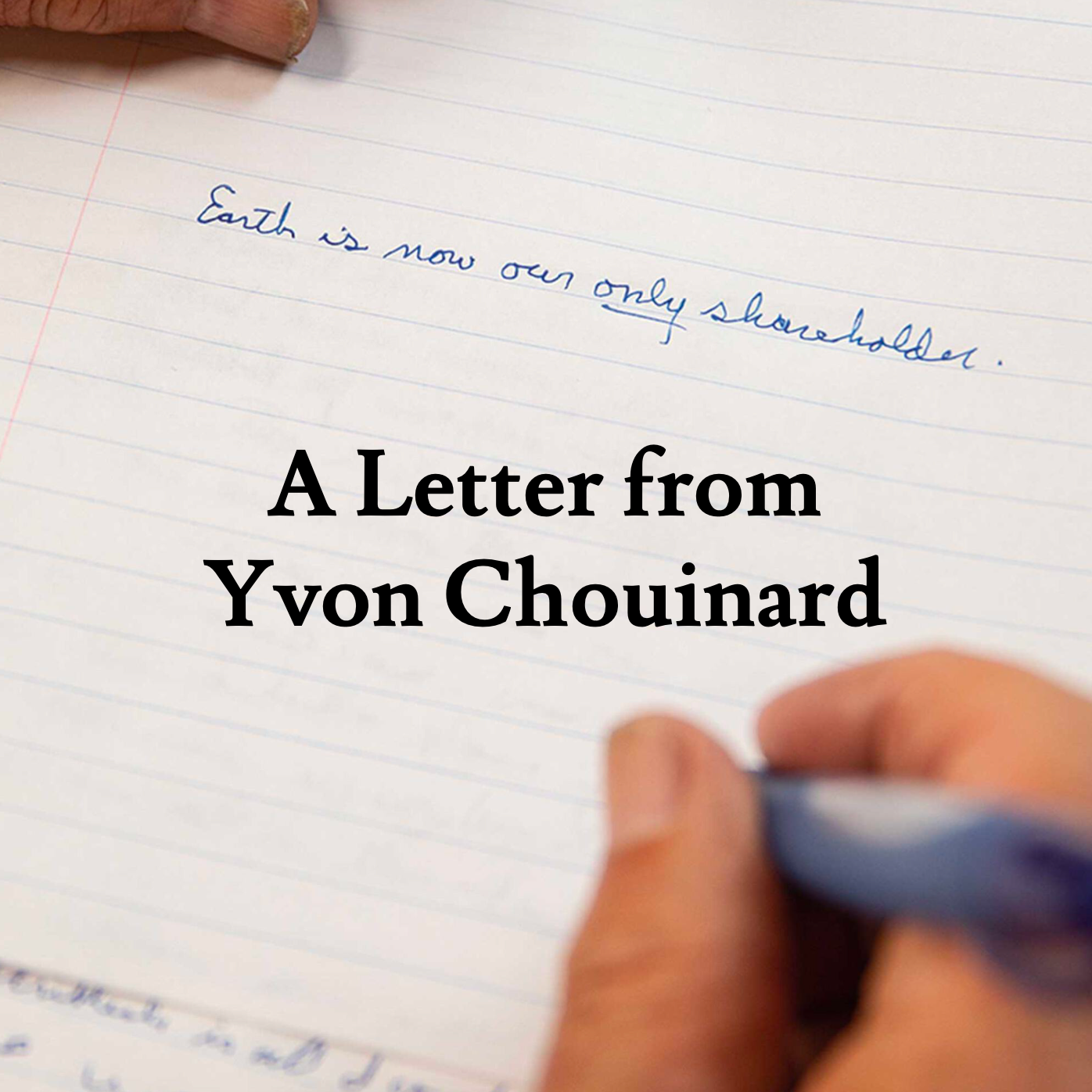
After giving Patagonia away in 2022, I’ve been working harder than an 87-year-old should. Threats to planetary health are increasing. The climate and nature crisis is worsening, and the truth is being lost in a sea of lies and misinformation. While I have gone back to my roots in design and working on our product quality, things are different. I feel an even deeper responsibility to help the company succeed and provide a counter to the prevailing extractive model of capitalism.
It has never felt more difficult.
The ownership transfer in 2022 solved how we ensure the company’s values stay intact beyond our lifetimes. It also unlocked a way to distribute more money toward saving the planet. We knew we would have to solve other questions as we went, but we never imagined we would be facing trade wars wreaking havoc on the global economy and an assault on nature and the environment at the same time.
Profit has never been Patagonia’s goal, but money and how we run our company are two of the most effective tools we have to protect nature. We dedicated our business to saving the planet, but policy now openly benefits those who succeed by exploiting it. We are seeing what happens when extractive capitalism becomes government doctrine.
The pursuit of short-term profit and mindless consumption are destroying the planet, and it is bad for most businesses. To put it into perspective, when Patagonia was founded in 1973, the average lifespan of an American company on the S&P 500 was around 30 years. Today, it’s less than 18. More companies are being bought up or hollowed out, and the population of billionaires is climbing. Entrepreneurial success went from building a durable business to selling it off to the highest bidder. It is not sustainable, yet it does not show signs of stopping any time soon. Coupled with an attack on science undoing decades’ worth of progress on climate change, any company interested in long-term survival should consider changing its primary purpose to saving our home planet—unless it has a way to make money on a dead one.
Patagonia is not perfect by any means. We do not have all the answers, but the fear of getting things wrong in the process cannot stop us from trying to get things right in the end. We have work ahead of us to reach the full potential of our business structure, prove this experiment works and explain why it matters to our employees and community.
What is clear is that for all the work we’ve done on our products and in our supply chain, and all the money we’ve given away to environmental nonprofits, it is still not enough. We can dedicate all our time and resources to saving the planet, but our impact is ultimately limited considering what we are up against. If supporting grassroots activists taught us anything, however, it is that when enough individuals come together, it is possible to take on a system.
To get there, businesses must exist to do more than provide a good service or make a quality product, and they definitely need to exist to do more than enrich a handful of individuals. They can and should exist to solve problems. Corporate influence already crosses borders and shapes government policy everywhere. Imagine what could happen if interest groups and lobbyists prioritized planetary and human health over environmental deregulation. Or if even just a few multinational mega-corporations dedicated some of their profits toward doing good beyond what can be written off their taxes. Similarly, if enough companies join together and decide our planet takes precedence over profit, we can change the world. We could change capitalism for good. We might even save the planet.
The next 50 years will not be easy. The planet is in bad shape, and many leaders have given in to cynicism or profiteering. But that does not have to be the way we go. Businesses and society can reject hopelessness and apathy and instead shape a future that can support all of us. We can refuse factory farms, poisoned air and water, and quarterly earnings being the basis of our morals.
We can change this fatal form of extractive capitalism that has brought us here. But we have to take the first step.